
MICRO Participants: Academic Year ‘25-’26
We invite you to get to know the MICRO participants from the ‘25-’26 academic year.
Axel Magana

Axel Magaña Ponce is a third-year Engineering Physics major with a Mathematics minor at Elmhurst University. His research focuses on photonic computing as a solution to AI’s growing energy demands, designing ring-resonator-based elements on thin-film lithium niobate (TFLN) to enable scalable, energy-efficient photonic systems. Using Lumerical simulations, he optimizes resonator geometries to enhance performance metrics like free spectral range and quality factor. Previously, he worked on Li-ion battery safety and contributed to the timing system for the P-ONE neutrino experiment. Outside of research, Axel is a Head Resident Advisor, a math and physics tutor, and enjoys powerlifting, playing the violin, and reading. He plans to pursue a Ph.D. in applied physics or materials science.
Gabriella La Cour

Gabriella La Cour is a first-year student at Spelman College, pursuing a major in chemistry and dual degree biomedical engineering, complemented by a minor in mathematics. At Spelman College, she is a Dovey Johnson Roundtree Presidential Scholar, Amazon Future Engineer Scholar, Woman in STEM (WiSTEM) Scholar, and Micron Engineering Leadership Development Scholar. Gabriella La Cour is also an undergraduate research assistant in the Ashley lab. Her research focuses on increasing the engagement of Black women in STEM via the development of an interactive chemistry video game with haircare/skincare modules based on melanin. This past summer, she researched the effect of MSH2 mutations on the yeast cell cycle under Dr. Steve Kioko, observing how specific MSH2 mutations affect yeast cell division. In the future, Gabriella plans to earn a Ph.D. in biomedical engineering, with a focus on biomaterials or biofilms. She intends to pursue a career in biomaterials research and development, focusing on the biocompatibility of biomaterials. In her free time, Gabriella enjoys spending time at Spelman’s innovation lab, documenting her time with friends, and growing her collection of Sonny Angels.
Ana Colliton
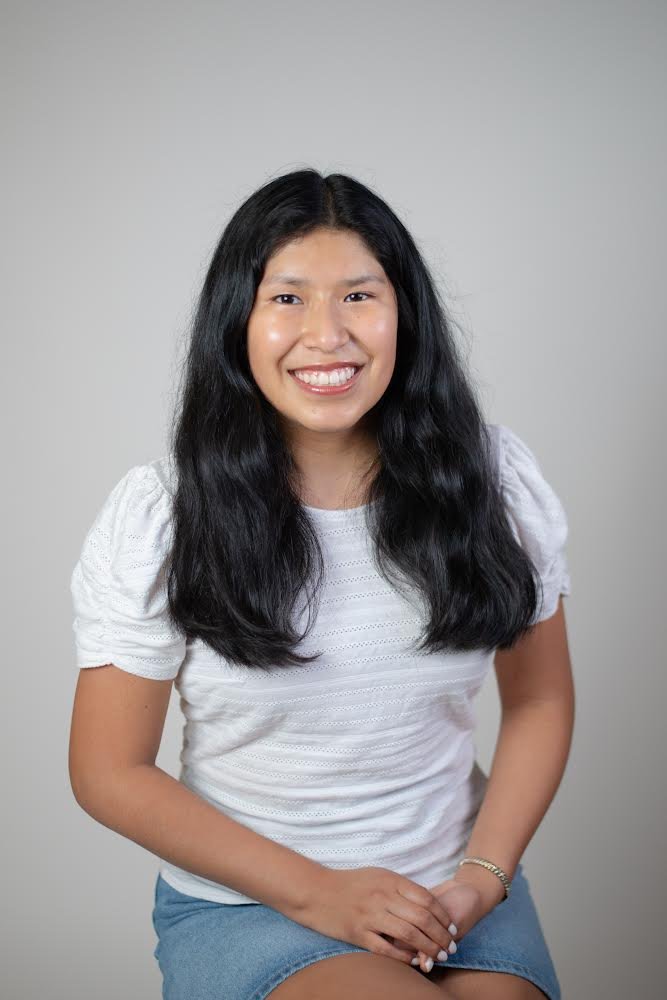
Ana Colliton graduated from St. Olaf College with a Bachelor's degree in both physics and math. She has a strong commitment to research, mentorship, and diversity in STEM. Her current research in the Joester lab focuses on biominerals. She plans to pursue a Ph.D. in Materials Science and Engineering at Northwestern University starting in the Fall 2026, where she aims to develop innovative materials for renewable energy or manufacturing applications while continuing to advocate for inclusion and representation in STEM.
Neal Haldar

Hi! My name is Neal Haldar, and I am a second year studying chemistry with a minor in public policy at the University of California, Berkeley. When I have free time, I like to play the viola and climb anything I can get my hands on. Currently, my research interests lie at the intersection of new spectroscopies, materials dynamics, and photonics. I hope to one day be a professor in chemistry who inspires the next generation of scientists just as my mentors have done for me.
Sean Lam

Sean Lam is a second-year physics and chemistry double major at Colorado College (CC). At CC, he is a Bridge Scholar, Pathways to SCoRe Fellow, and an astrophysics research assistant in the DK Group. He will be working in the VPD Group at Northwestern with Dr. Roberto dos Reis, employing quantum algorithms and developing quantum machine learning techniques to enhance microscopy data simulation and analysis. In the future, Sean plans to earn a Ph.D. in Applied Physics or Materials Science and Engineering, with aspirations for a career in academia and research. He aims to contribute to impactful, interdisciplinary research while also mentoring future scientists, especially those from traditionally underrepresented backgrounds. Outside of academics and research, Sean enjoys being a student-athlete on the CC Men's Track & Field Team and serves as a videographer for the CC Athletics Department.
Simone Lang

Simone Lang is a fourth-year chemistry student at Texas Woman’s University. Her interests lie in computational chemistry and materials science, particularly metals, catalyst and low-dimensional materials. She has presented at national conferences and co-authored two publications in the Journal of Colloid and Interface Sciences. She will be conducting research in Rodrigo Freitas’ group, specializing in high-entropy alloys for corrosion resistance applications using Monte Carlo simulations. Driven by her passion for computational techniques and machine learning, Simone aims to pursue a Ph.D. in Material Science and Engineering, contributing to advancements in the field and addressing environmental challenges. In her free time, she enjoys volunteering at the local tutoring center, helping students excel in calculus, and giving back to her community by promoting chemistry education in low-income schools through her role as president of the Kappa Epsilon Mu (KEM) chemistry club at Texas Woman's University.
Alana Canty
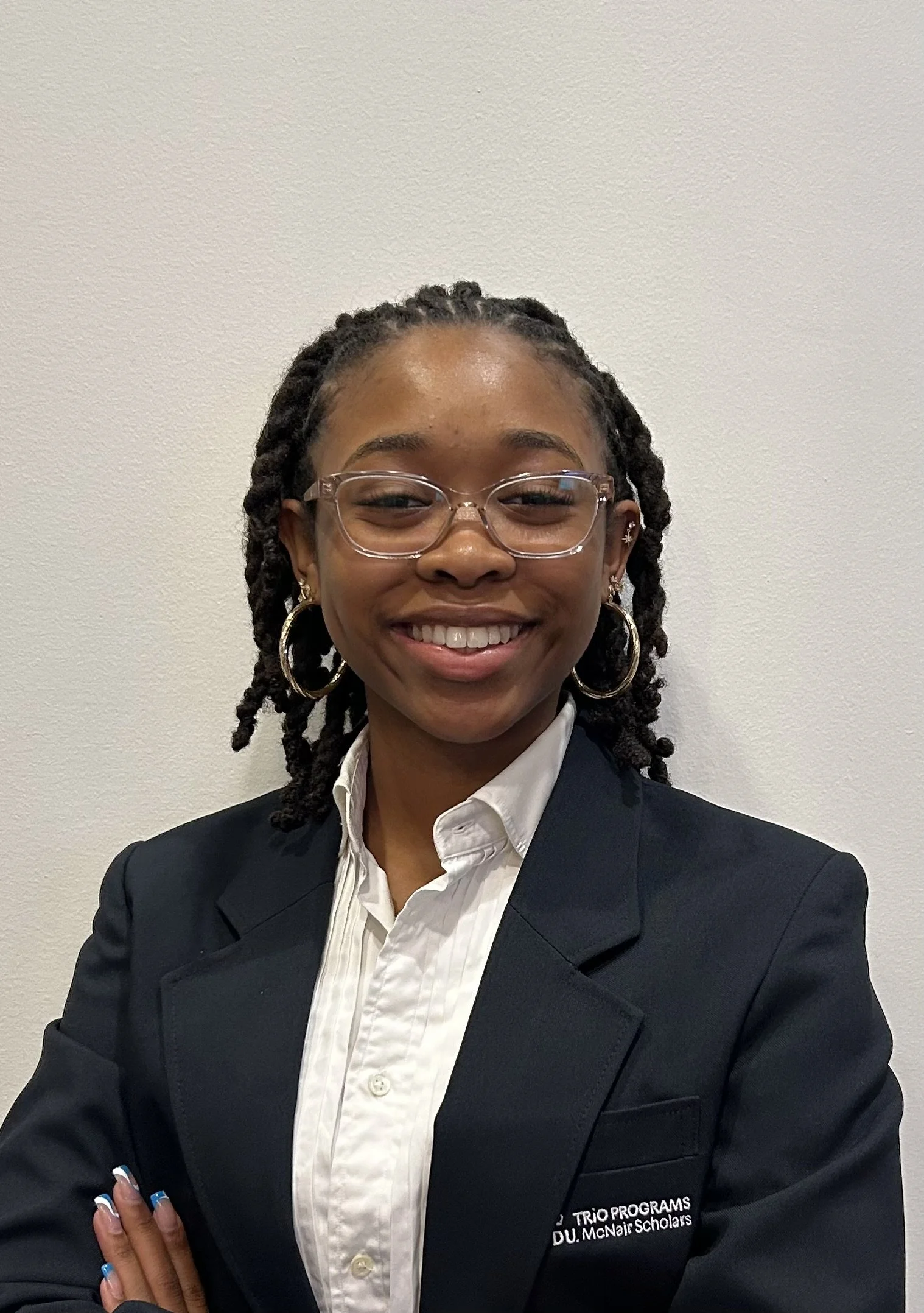
Alana Canty is a senior at Old Dominion University majoring in Biomedical Sciences with a minor in Biomedical Engineering. At ODU, she is a Ronald E. McNair Scholar, NIH U-RISE trainee, and member of the Perry Honors College. She has conducted research at Johns Hopkins University, Cornell University, and Old Dominion University, exploring topics such as nanoparticle synthesis for cancer diagnostics, microfluidic biosensing, and collagen-based bioinks. Currently, Alana works as a STEAM workshop facilitator for K-12 students in the Hampton Roads Virginia Community. Through the MICRO program, at Northwestern University, Alana will be working on computational modeling of fiber spinning to develop accessible polymer-based biomedical textiles. In the future, she plans to pursue a Ph.D. in Materials Science and Engineering to advance healthcare accessibility through material innovation. In her free time, Alana enjoys cooking and arts and crafts.
Jessica Shrestha
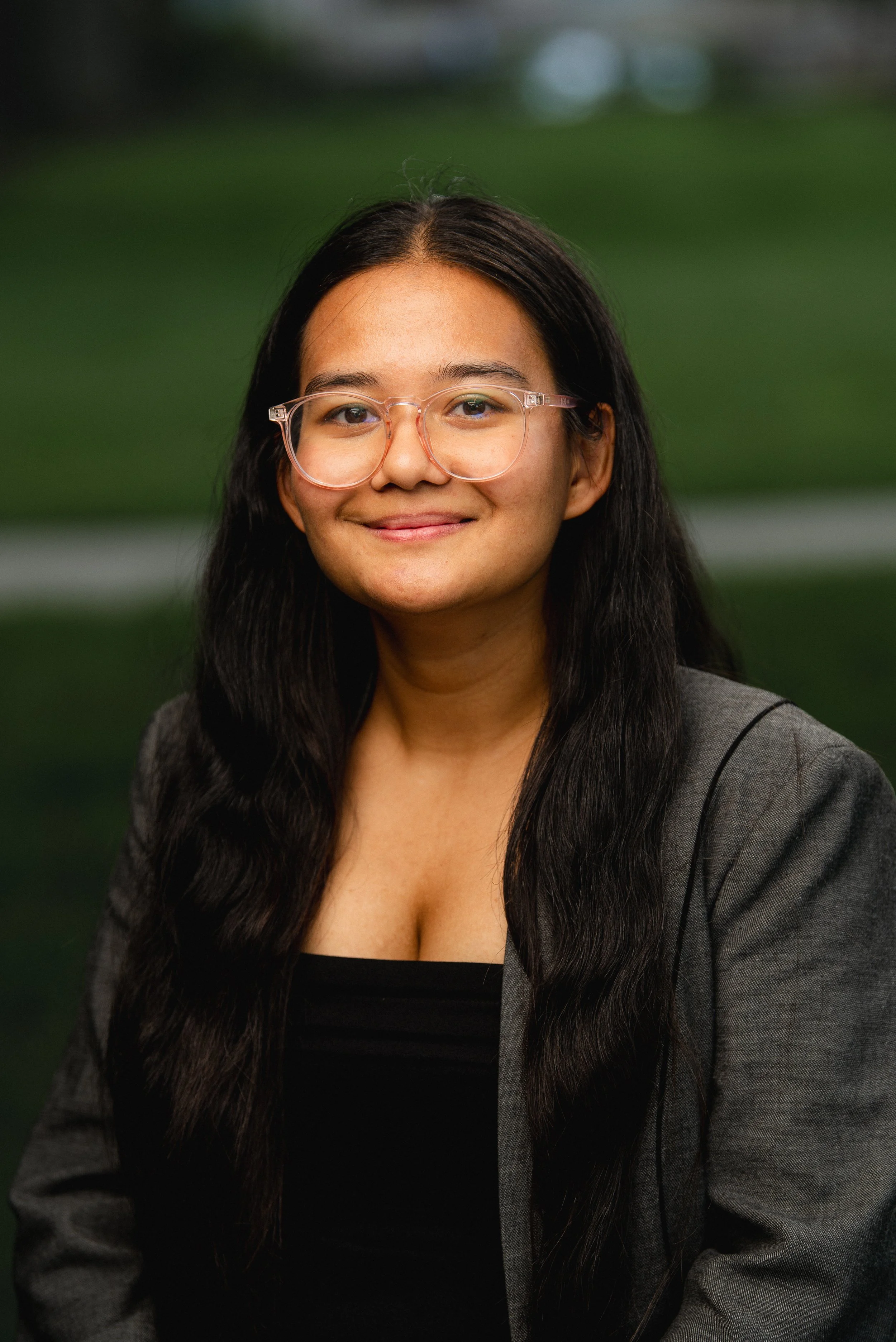
Jessica Shrestha is a senior Honors student at the University of Southern Mississippi majoring in Polymer Science and Engineering with minors in Chemistry and Mathematics. Her research focuses on engineering sprayable peptide amphiphile hydrogels for wound healing applications under Dr. Tristan Clemons. As part of her Honors thesis, she is exploring how variations in peptide, cell, and calcium concentrations affect the formation and performance of sprayable peptide amphiphile hydrogels. Jessica recently completed the MIT Summer Research Program, where she designed a reusable in vitro chamber for biosensor testing. She is currently a MICRO Research Intern at Northwestern University’s Stupp Lab, contributing to computational modeling of peptide amphiphile self-assembly. She plans to pursue a Ph.D. in materials science and engineering to design innovative biomaterials that connect molecular design with practical solutions in health and technology.
Anzheng (Alex) Tang
My name is Anzheng (Alex) Tang, and I am a junior majoring in physics and mathematics at Carleton College. I wish to deepen my knowledge and gain research experience in materials science, particularly metallurgy. From witnessing the metal fatigue of fencing blades to discovering the flexibility of airframe structures, from melting solder in jewelry making to relying on exhaust systems that that endure extreme heat, metallurgy has been a constant influence in my life.
In the MICRO program, I look forward to participating in a research project in the Schuh group that focuses on the grain boundary of metals with my mentor Dr. Matson. In this project, I aim to study how the microstructure of metals affects their physical properties. Previously, I interned with Hitachi’s Research and Development Department and contributed to LIGO (the Laser Interferometer Gravitational-Wave Observatory) research. Outside of academics and research, I enjoy fencing, skiing, and flying planes.
Kaito Chukwuka

Kaito Chukwuka is a junior at the University of Southern Mississippi, originally from Lagos, Nigeria, majoring in Polymer Engineering. His research focuses on advanced materials for energy and bioengineering applications, with a particular interest in wearable and flexible electronics. At his home institution, Kaito is actively involved in the Xiaodan Gu Research Lab, where he works on flexible electronics and solar cell fabrication for sustainable energy solutions.
At MIT, he is currently researching Organic Electrochemical Transistors (OECTs) for biosensing in the Organic Materials for Smart Electronics (OMSE) Lab. Passionate about bridging materials science and healthcare innovation, Kaito envisions a future in smart fabrics—designing textiles that integrate seamlessly with the body for health monitoring and adaptive functionality.
Beyond research, Kaito is committed to scientific communication and has co-authored Math In Case You Missed School and The Power of Energy, making STEM education more accessible to young learners. In his free time, he enjoys creating abstract art and DJing, both of which fuel his creativity and experimental approach to engineering.
Kaito aspires to pursue a Ph.D. in Materials Science, focusing on organic electronics, smart fabrics, and biointegrative devices. His goal is to develop next-generation materials for wearable healthcare, sustainable energy, and human-interfacing technologies—advancing engineering solutions that improve lives on a global scale.
Otito Chukwuka

Otito Chukwuka is a junior at the University of Southern Mississippi (USM) majoring in Polymer Science and Engineering. Originally from Nigeria, he is passionate about developing materials that drive innovation in soft electronics, with a particular focus on bioelectronics and wearable technology. His research journey has been shaped by a desire to bridge the gap between advanced materials and real-world applications in healthcare and energy.
At USM, Otito conducts research in Dr. Xiaodan Gu’s Organic Electronics Lab, where he explores the role of polymer morphology in enhancing the performance of conducting materials for organic photovoltaics. This work has equipped him with expertise in materials characterization techniques such as Atomic Force Microscopy (AFM). Building on this foundation, he spent a summer at MIT in Dr. Aristide Gumyusenge’s lab, where he investigated how side-chain engineering impacts ion uptake and charge transport in Organic Electrochemical Transistors (OECTs). These devices hold great promise for biosensing applications, particularly in precision medicine and neural interfaces.
Looking ahead, Otito plans to pursue a PhD in Materials Science and Engineering, specializing in flexible electronics. His long-term goal is to translate his research into real-world applications, potentially through entrepreneurship. He envisions developing a startup that accelerates the commercialization of bioelectronic devices for healthcare and performance tracking. Through the MICRO Fellowship, he hopes to deepen his expertise in materials innovation and connect with a network of researchers working at the forefront of soft electronics.
Zorah Williams
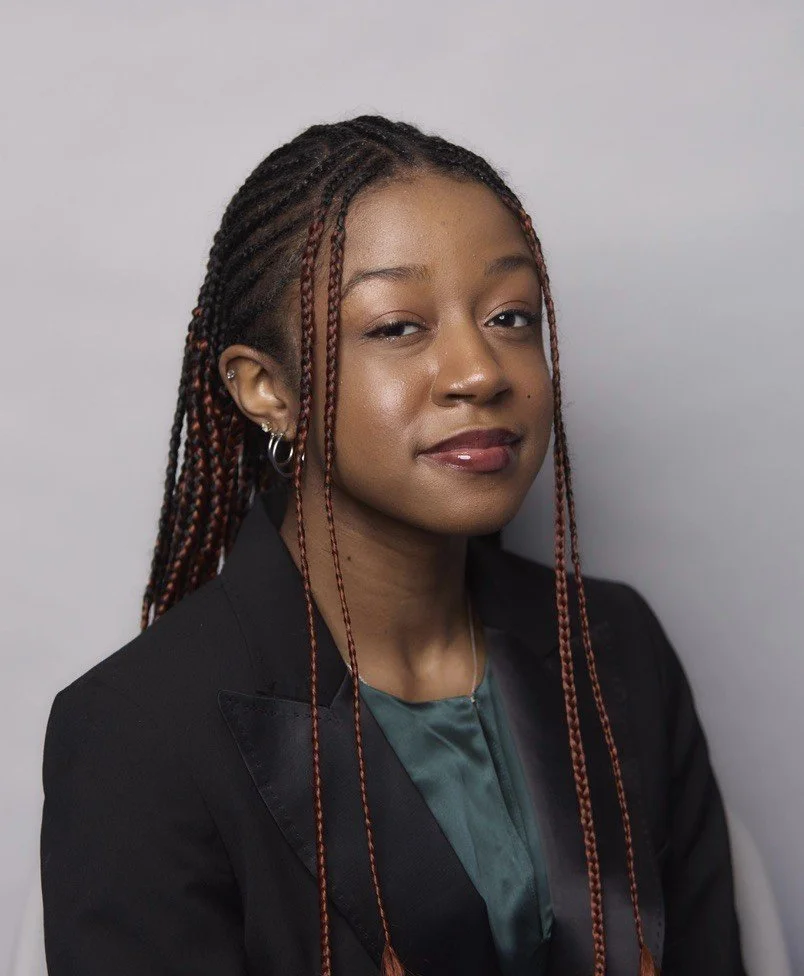
Zorah Williams is a fourth-year Chemical Engineering major at the University of Maryland, Baltimore County (UMBC), specializing in Environmental Engineering and Sustainability. She is a Meyerhoff Scholar (M34) and is actively engaged in leadership and research on campus. As a second-year MICRO participant, Zorah conducts research in the Sustainable Polymer Innovation Lab (SPIN) under Dr. Cécile Chazot, focusing on the development of electrochromic and structurally colored polymers for sustainable applications. Her current project builds on her summer research at Northwestern University, where she designed ethyl cellulose–poly(acrylic acid) composite films with varied molecular weights to tune optical properties and assess mechanical performance. This semester, she is extending that work by applying automated image analysis to better understand phase behavior and improve experimental efficiency.
Beyond her technical work, Zorah is passionate about mentorship and serves as a peer mentor within the Meyerhoff Scholars Program and UMBC Student Disability Services. Her broader research experience spans systems engineering, environmental science, electrochemistry, and materials science, with a focus on advancing sustainable materials. She plans to pursue a Ph.D. in Materials Science and Engineering to continue developing innovative, sustainable materials for environmental and structural applications.
In her free time, Zorah enjoys collecting Lego Botanical sets, watching movies, baking, reading, and spending quality time with family and friends.
Michael Angelo San Juan
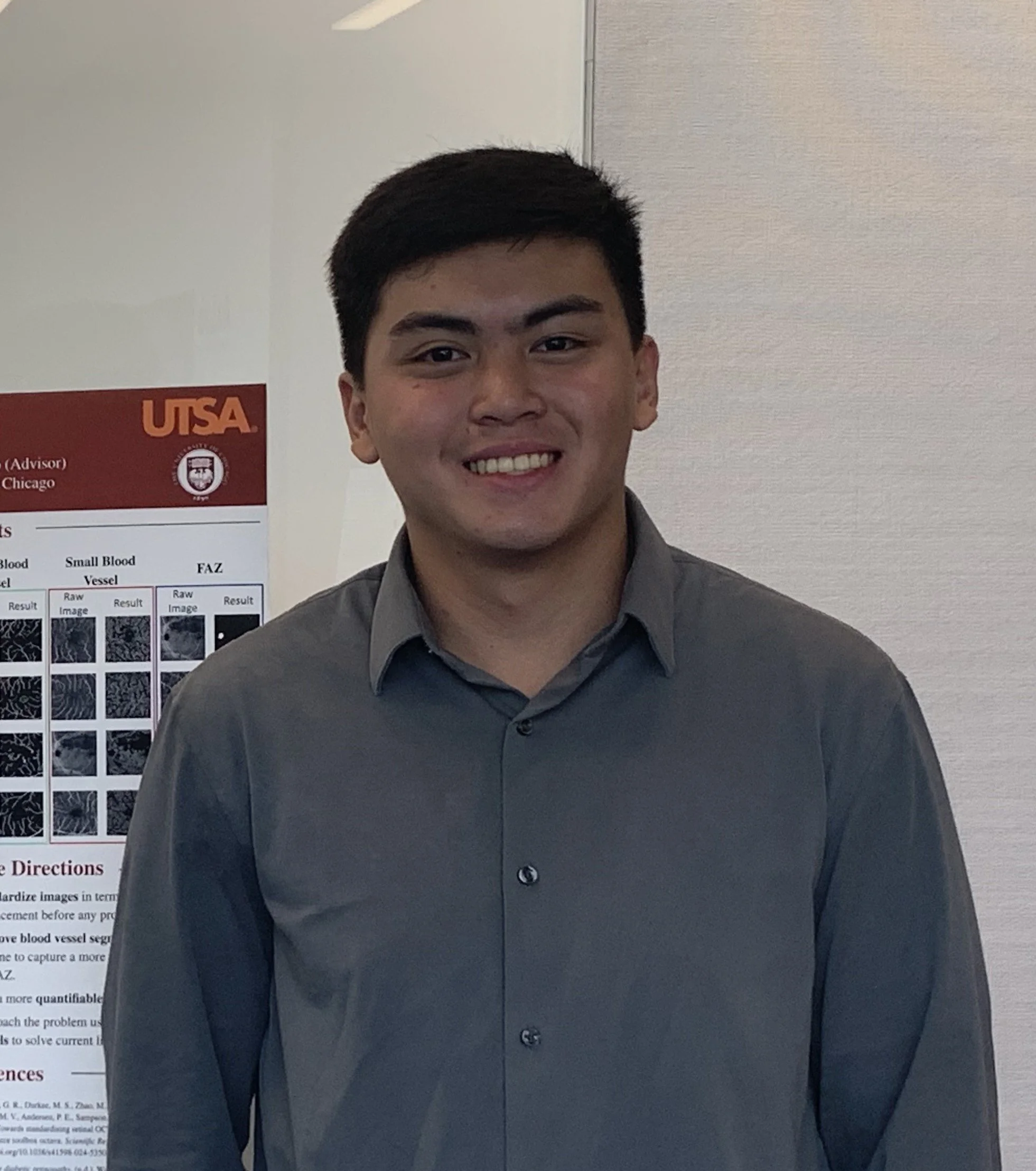
Michael Angelo San Juan is a junior majoring in Chemical Engineering with a minor in Computer Science at the University of Texas at San Antonio. His interests lie at the intersection of computer science, machine learning, and materials science, with a focus on using computational methods to understand and design advanced materials. He is an undergraduate researcher in the Computational Soft Condensed Matter Group, where he employs dissipative particle dynamics to model amphiphilic triblock copolymers for drug delivery applications. Michael aims to pursue a Ph.D. in Materials Science and Engineering to advance the development of computational materials for sustainable energy and biomedical technologies. Outside of research, he works as an engineering tutor, enjoys playing the ukulele and piano, and is passionate about bouldering.
Chi Nguyen
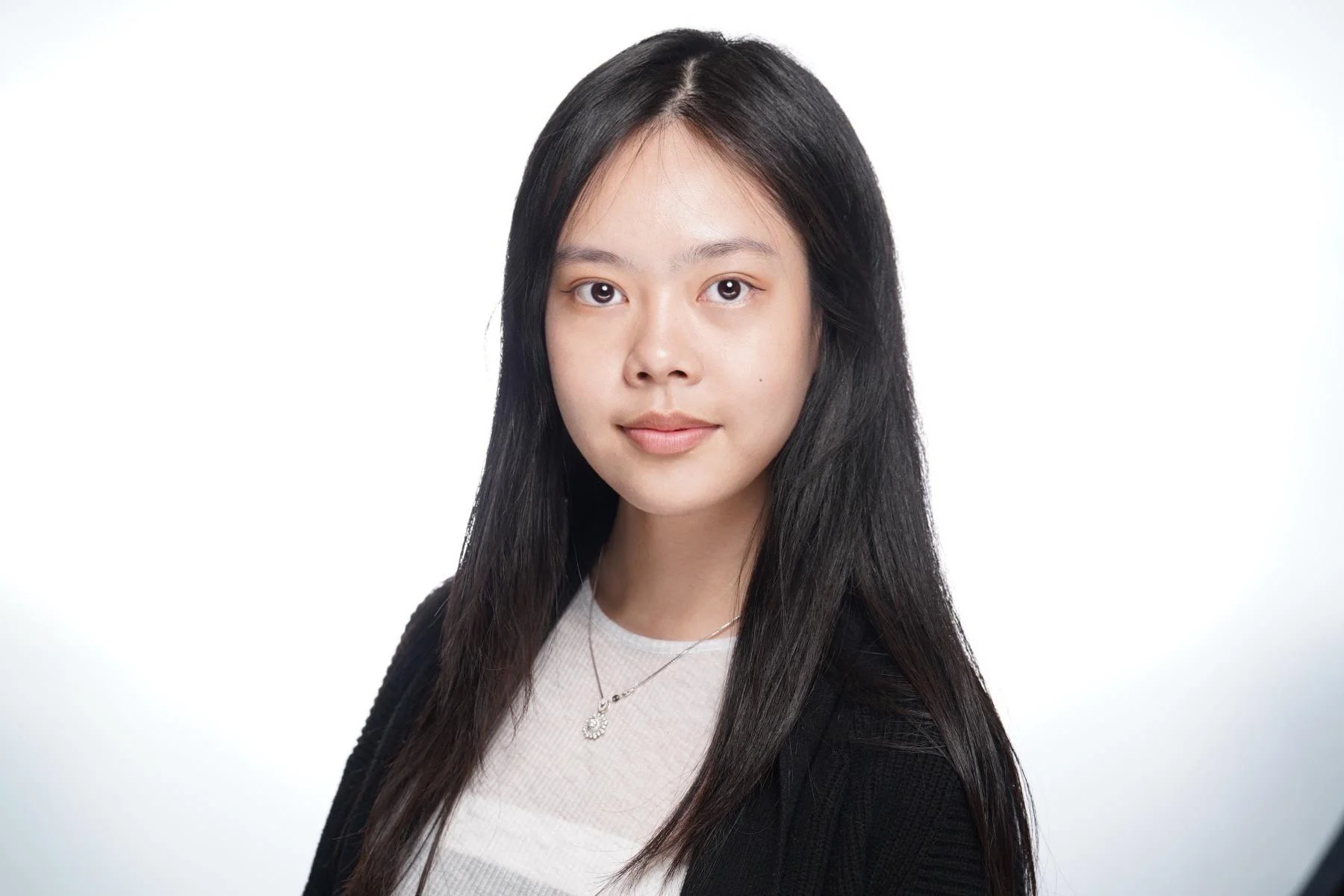
My name is Chi, and I’m from Vietnam. I am a Chemistry major at Davidson College with research interests in biomaterials and regenerative medicine. I work in Dr. Samuel Stupp’s lab, where I design and synthesize peptide amphiphiles (PAs) to study their self-assembly and applications in tissue repair. Previously, I investigated enzyme-catalyzed synthesis of pharmaceutical amines and protein-mediated mechanisms in ovarian cancer. These experiences have strengthened my passion for combining chemistry, biology, and materials science to develop functional materials that advance therapeutic and biomedical technologies.